


Equipment
- 1 12" stainless steel pan
Ingredients
- 1 lb pasta spaghetti, penne, or any pasta works great
- 1.5 lbs tomatoes fresh, plum or cherry tomatoes work best
- 1 tbsp garlic minced
- 2 tbsp basil fresh, chiffonade
- 2 ladels pasta water
- parmesan cheese freshly grated, for garnish
Instructions
- In a pot, add pasta and water. Bring to a boil and cook as directed until al dente.1 lb pasta
- While the pasta is cooking, preheat a stainless steel pan over medium heat. To test the pan is properly heated, you should be able to water your fingers and then flick water drops on the pan and the water beads on the surface.
- Once the pan is up to temp, add olive oil and let it preheat for about 5 seconds.
- Add the tomatoes and toss to coat in oil. Allow them to cook until their skins are wrinkled and blistered, tossing frequently.1.5 lbs tomatoes
- Once the tomatoes are wrinkled and blistered, use a fork, masher, or spatula to begin to press the juice out of the tomatoes. Don't pop the tomatoes and flatten them. You want to gradually release the juice. Continue to cook, then press, then cook until they are all flattened, tender, and juices are released (about 5 minutes).
- Add garlic and mix in. Continue cooking for another 5 minutes.1 tbsp garlic
- At this point, your pasta should be finished. Remove the pasta from the water and place it directly into the sauce. Don't drain the pasta. You want that starch water to thicken the sauce.
- Stir until combined. Add pasta water and continue cooking for another 5 minutes.2 ladels pasta water
- Add fresh basil. Salt and pepper to taste. Garnish with parmesan. Serve.2 tbsp basil, parmesan cheese
Nutrition
 What do you think of this recipe?Keep scrolling for the full recipe post. Please consider Leaving a Review!
A stainless steel pan is non-negotiable for this one. It’s the secret weapon for balancing out tomato acidity and coaxing out their natural sweetness without a single grain of sugar. Nonstick pans just won’t create the caramelization it takes to release the sugars from the tomatoes.
I’ve cooked this both ways, nonstick and stainless steel. The nonstick pan can blister the tomatoes, but the tannins were still there. In a steel pan, I never get that same effect. That’s why I use stainless steel for all of my tomato-based dishes. It cuts the acidity.
Here’s what’s actually happening in the pan.
Why Stainless Steel Beats Nonstick for Tomatoes
It gets hot enough to blister
Nonstick coatings act like a heat barrier. The pan can’t get hot enough to rapidly char the tomato skins. Stainless steel gives you intense, direct heat transfer, and that heat instantly caramelizes the natural sugars in the tomato flesh right where it hits the pan (a process called the Maillard reaction). That caramelized, charred flavor directly counteracts and balances the sharp citric acid of the plum tomatoes.
It builds fond
In a stainless steel pan, tomatoes stick. Just a tiny bit. They leave browned sugars and juices stuck to the bottom, and that’s called fond. When you crush the tomatoes and swirl in the pasta water later, you’re deglazing the pan, dissolving that deeply flavorful, sweet fond right back into the sauce.
A nonstick pan doesn’t let fond form. You lose out on that complex, sweet depth completely.
It evaporates water fast
Fresh plum tomatoes hold a lot of excess water. Stainless steel cooks much hotter and faster, so that water evaporates rapidly. Reducing the water concentrates the natural sugars that are left, which thickens the sauce on its own and makes it taste inherently sweeter and richer. Not watery. Not sour.
That’s the whole reason there’s no sugar here. Salt and pepper only, and the pure, concentrated chemistry of the tomato does the rest. Even in my marinara and pizza sauce, which starts with canned San Marzanos, I’ll tell you a pinch of sugar can round out tangy tomatoes. With fresh tomatoes and a hot stainless pan, you don’t need it.
Getting the Pan Up to Temp
None of that works if the pan isn’t hot. While the pasta cooks, preheat your stainless steel pan over medium heat.
To check it, wet your fingers and flick a few drops of water onto the pan. If the water beads on the surface, you’re ready. This is called the water drop test, and what you’re seeing is the Leidenfrost effect: the droplets combine and float on the surface. It means the pan is about 450°F or higher.
Once it’s up to temp, add the olive oil and let it heat for about 5 seconds.
The Tomatoes
I use fresh plum tomatoes, San Marzano to be specific. Cherry tomatoes are just as good, though. It really comes down to what I have on hand.
I usually don’t weigh out my tomatoes. I just grab enough to fill the bottom of a 12″ stainless steel pan, and that’s usually about 1.5 lbs.
Toss them in the oil to coat, then let them cook, tossing frequently, until the skins are wrinkled and blistered. That blistering is the charred, caramelized flavor from earlier.
Then start pressing. Use a fork, masher, or spatula to press the juice out of the tomatoes. Don’t pop them and flatten them. You want to release the juice gradually. Cook, then press, then cook again until they’re all flattened and tender and the juices are released. That takes about 5 minutes.
Add the garlic, mix it in, and keep cooking for another 5 minutes.
Pasta Water + Fond
By now the pasta should be al dente. Don’t drain it. Pull it out of the water and put it directly into the sauce, because you want that starch water to thicken the sauce.
Stir until combined, then add 2 ladles of pasta water and cook for another 5 minutes. This is the deglazing step. The pasta water dissolves the fond off the bottom of the pan and back into the sauce.
Spaghetti, penne, any pasta works great here. That includes fresh noodles cut from my homemade egg pasta dough if you want to go that route.
Finish It Simple
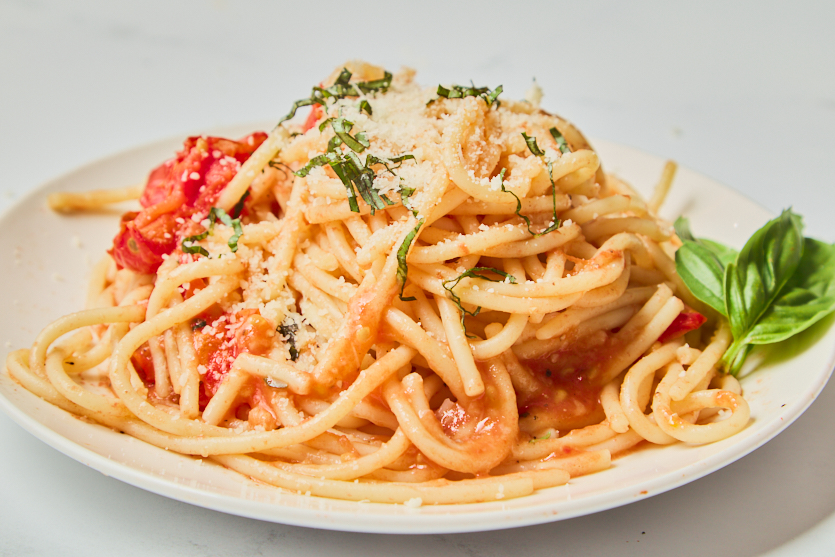
Add fresh basil cut into a chiffonade. Salt and pepper to taste. Garnish with freshly grated parmesan and serve.
If you’re turning this into a full Italian dinner, start with a caprese salad with burrata while the pasta water comes to a boil.
For something to drag through the leftover sauce, my soft pretzel garlic knots do the job.