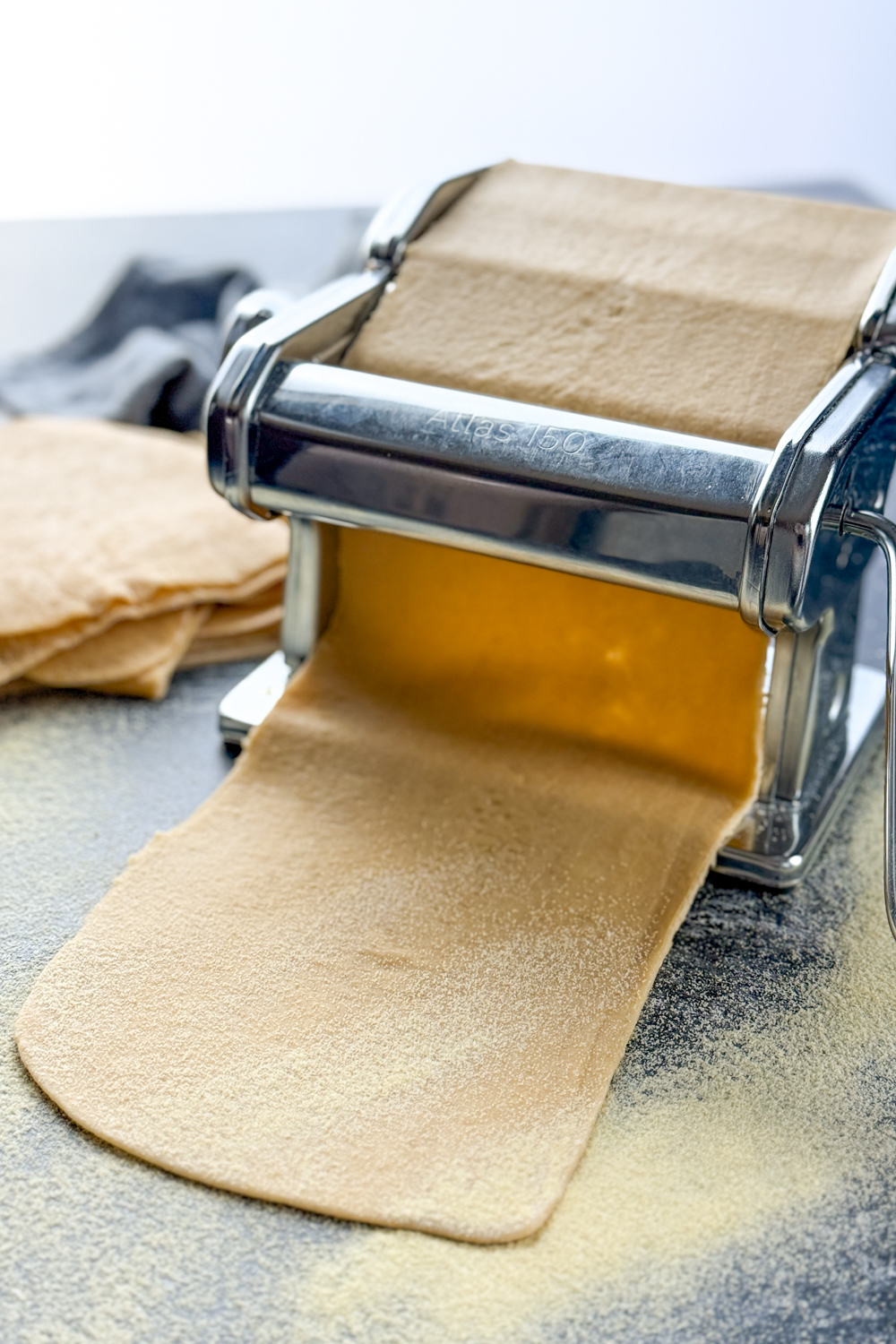


Ingredients
- 350 g all-purpose flour or 2 ¼ cups
- 50 g semolina flour or 5 tablespoons
- 225 g eggs *about 4 eggs (see note)
Instructions
Food Processor Method (my preferred method)
- In a food processor, add the all-purpose flour and semolina flour to the bowl of a food processor. Pulse a few times to mix.
- With the processor running, slowly pour in the eggs through the feed tube while pulsing.
- Continue pulsing until the dough resembles coarse breadcrumbs. It should just start to come together but not form a ball.
- If the dough seems too dry, add water 1 teaspoon at a time. If too wet, sprinkle in a little flour.
- Turn the dough out onto a clean surface and knead it for 1–2 minutes until smooth.
- Wrap tightly in plastic wrap and rest at room temperature for at least 30 minutes before rolling (1 hour is more ideal).
Stand Mixer Method
- In the bowl of a stand mixer fitted with the paddle attachment, combine the all-purpose and semolina flours.
- Add the eggs directly into the flour mixture and mix on low until a shaggy dough forms.
- Swap the paddle for the dough hook. Knead on medium-low speed for 8–10 minutes, until the dough is smooth and elastic.
- If the dough is too dry, add water a teaspoon at a time. If too wet, dust with flour.
- Remove the dough, shape it into a ball, wrap in plastic, and let it rest at room temperature for 30–60 minutes before using.
By Hand (Traditional Method)
- On a clean countertop or large board, create a flour well by mixing the flours and mound them into a pile. Use your hands or a bowl to create a wide well in the center.
- Crack the eggs into the well.
- Use a fork to gently beat the eggs, gradually pulling in flour from the inner rim of the well. Keep going until a thick paste forms.
- Use your hands to mix in the rest of the flour. Once it starts forming a dough, knead it.
- Knead the dough for about 10 minutes. It will be stiff at first, but it should become smooth and pliable.
- Form into a ball, wrap in plastic wrap, and let it rest for 30–60 minutes at room temperature before rolling out.
Notes
Nutrition
 What do you think of this recipe?Keep scrolling for the full recipe post. Please consider Leaving a Review!
Fresh pasta is one of those things that sounds way harder than it actually is. Four ingredients (technically three if you don’t count water as an ingredient). No yeast. No proofing. No rise time. Just flour + eggs → silky, tender noodles that make the dried stuff taste like cardboard. Dramatic? Maybe. But I stand by it.
I’m giving you three different methods here because not everyone has the same setup in their kitchen. Food processor, stand mixer, or good old-fashioned hands-on-counter. They all work. I personally reach for the food processor most of the time because it’s fast and almost foolproof, but I’ll be honest, there’s something satisfying about making the well by hand and feeling like you’re in a tiny apartment in Bologna. Even if you’re actually standing in your kitchen at 9 PM on a Tuesday still wearing your work clothes.
Why Semolina Matters
Most egg pasta recipes call for all-purpose flour and nothing else. That works fine. But adding a portion of semolina flour gives the dough more texture, more bite, and a subtle golden color that looks like you know what you’re doing. Semolina is coarser and higher in protein than AP flour, so it adds structure without making the pasta tough. Think of it as the difference between a noodle that just exists on your plate and a noodle that actually has some grip to hold onto your sauce.
The ratio here is 7:1 by weight, all-purpose to semolina. Enough to make a noticeable difference, but not so much that the dough fights you when you roll it out. If you’ve ever wrestled with a sheet of pasta that kept snapping back like a rubber band, too much semolina (or not enough rest time) was probably the culprit.
Weigh Your Eggs. Seriously.
This is the single biggest thing you can do to get consistent results every time you make pasta. Eggs vary wildly in size, even within the same carton. A “large” egg can weigh anywhere from 50 grams to 65 grams, and that swing matters when you’re building a dough that’s basically just flour and eggs. Crack them into a separate bowl, set it on a kitchen scale, and weigh them before they go anywhere near the flour. If you’re a little under weight, add water a teaspoon at a time. If you’re over, scoop out some of the whites.
I know buying a kitchen scale feels like one of those things food bloggers say just to sound serious. But I promise this is the one piece of equipment that will change your cooking more than anything else. It takes the guesswork out of baking, pasta making, and honestly most things in the kitchen.
The Rest Is Not Optional
After you bring the dough together (by whatever method you choose), you need to wrap it up and let it sit. At least 30 minutes. An hour is better. I know it’s tempting to skip this step, especially when you’re hungry and the dough looks ready. But resting lets the gluten relax, which means the dough will be easier to roll out, less likely to spring back on you, and more pliable overall. Skip it, and you’ll be fighting with a stiff, elastic ball that refuses to cooperate. Ask me how I know.
Room temperature is fine for the rest. No need to refrigerate unless you’re planning to hold it for longer than an hour or two.
Which Method Should You Use?
All three methods in this recipe produce the same dough. The food processor is the fastest, usually about 30 seconds of pulsing before you turn it out and do a quick knead. The stand mixer with a dough hook takes a bit longer but is great if you want to be hands-off. And the traditional by-hand method takes the most time and effort, around 10 minutes of kneading, but it gives you the most control over the feel of the dough. If you’ve never made pasta before, I’d actually suggest trying the hand method at least once. You’ll learn what the dough is supposed to feel like at each stage, and that knowledge carries over no matter which tool you use next time.
What to Make With It
Once you’ve got your pasta dough rested and ready, you can roll it into just about anything. Sheets for lasagna with homemade noodles, fettuccine for crispy chicken fettuccine alfredo, or tagliatelle to toss with a rich homemade bolognese meat sauce. Pappardelle, ravioli, linguine. Same dough, different shapes, completely different meals.
Storage Tips
Fresh pasta dough keeps well in the fridge for up to two days, wrapped tightly in plastic. You can also freeze it. Just flatten the dough into a disc before wrapping so it thaws more evenly. When you’re ready to use it, let it come back to room temperature before rolling. Trying to roll cold dough is an exercise in frustration, and life’s too short for that.
If you’ve already cut the pasta into noodles, toss them with a little semolina flour to keep them from sticking, then nest them loosely on a sheet pan. They’ll keep in the fridge for a day, or you can freeze them flat on the pan and transfer to a bag once solid.