

Equipment
- 1 stand mixer for mixing
- 1 deep pot or wok, for frying
Ingredients
- 400 g bread flour
- 160 g whole milk
- 145 g water
- 80 g white sugar
- 1 egg large (about 50g)
- 4 g instant yeast
- 7 g fine salt
- 35 g Kerrygold butter softened (about 3 tbsp)
- 5 g vanilla extract 1 tsp
- neutral oil for frying
- ½ cup powdered sugar for finishing
Instructions
Mix the dough
- Combine milk and water in a microwave-safe bowl. Warm to about 95–100°F.
- Add the egg and vanilla extract. Whisk until combined.
- In the bowl of the stand mixer, add flour, yeast, and sugar. Mix thoroughly.
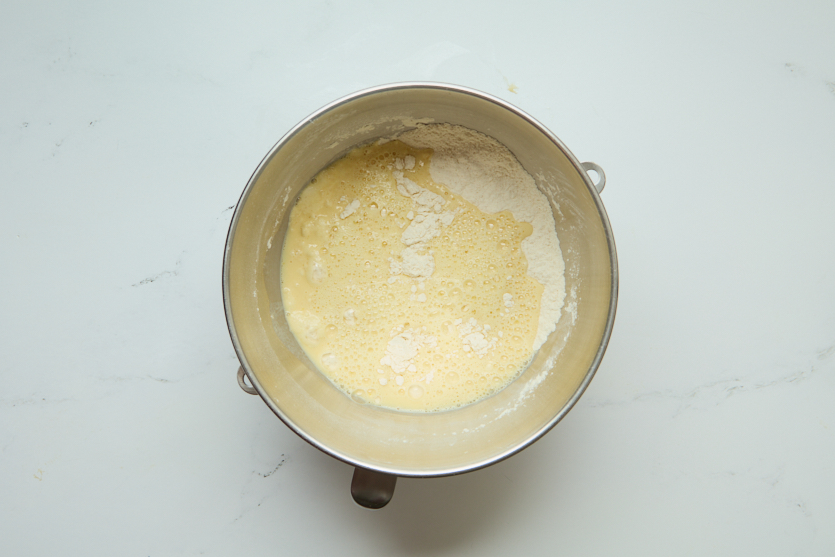
- Add the wet ingredients to the dry ingredients. Use a spatula to combine until a shaggy dough has formed.
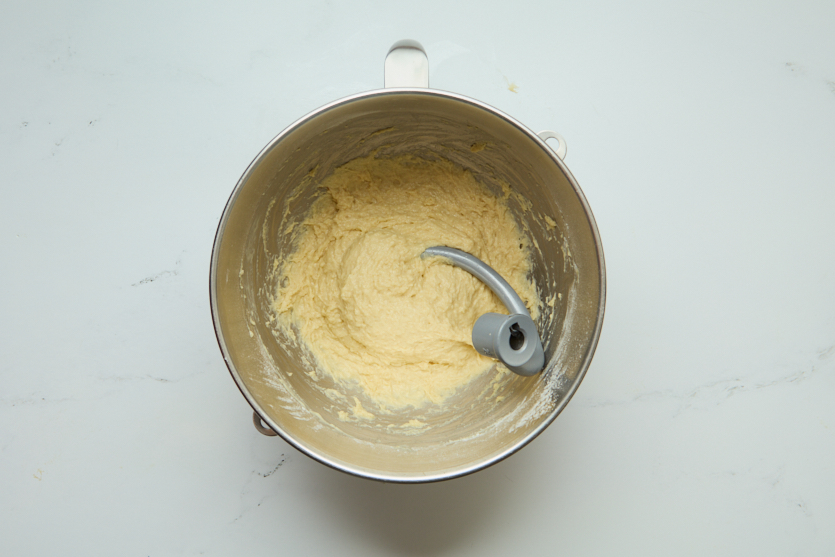
Rest 10 minutes
- Let the dough rest for 10 minutes.
Develop the gluten
- Use a dough hook and knead the dough on medium-high speed (setting 6) for 5-6 minutes until the gluten begins to develop and a smooth, elastic dough begins to form.
Add the butter
- Add butter and knead on medium-high speed (setting 6) for another 5 minutes.
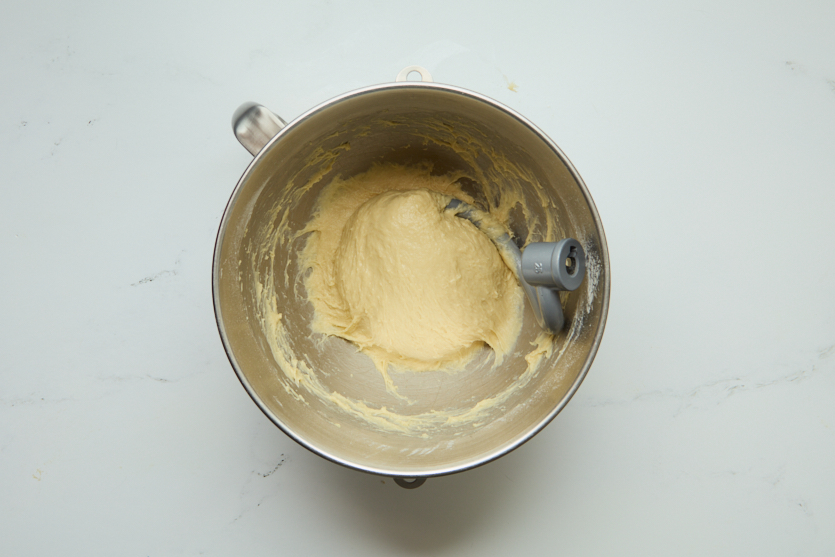
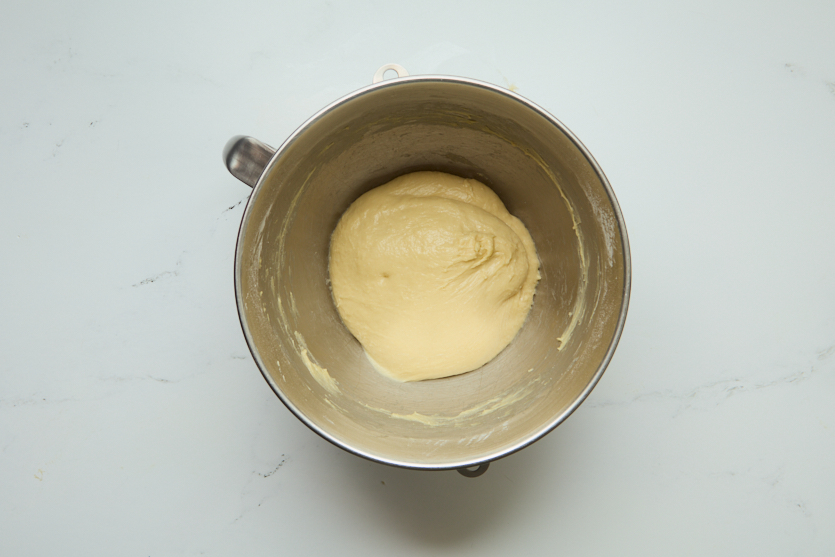
- Add salt and knead for another 1 minute. The dough will be very soft and sticky. Don't add flour.
Bulk ferment
- Transfer to a lightly greased proofing container and cover.
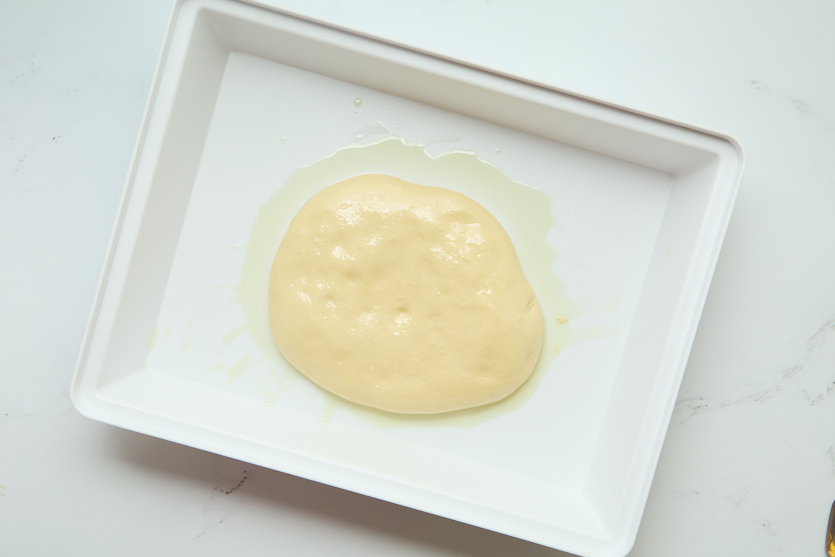
- Place the container in the oven and turn on the oven light. Let the dough rise for 2 hours.
Roll and cut
- Turn out onto a lightly floured surface. Lightly dust the dough with flour.
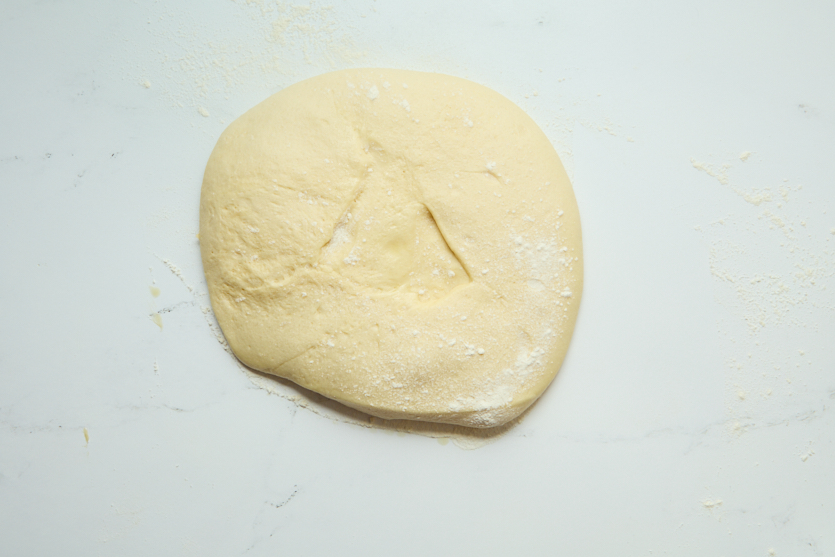
- Using your hands and a rolling pin, shape it into a 6.5"x15" rectangle. Dough should be about 1/2" thick.
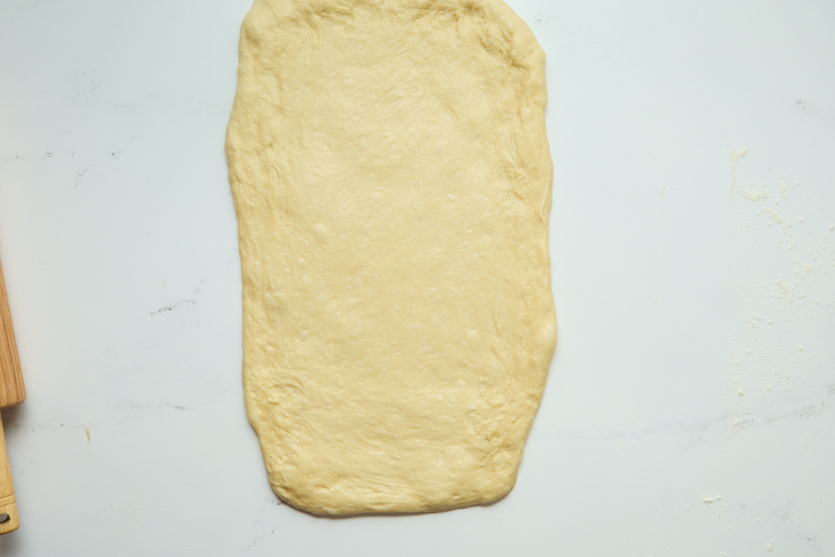
- Using a sharp knife or pizza wheel, cut 6 vertical strips that are 2½-inch wide. The cut 4 horizontal cross sections that are 2½-inch wide. This will result in 24 2½-inch pieces.
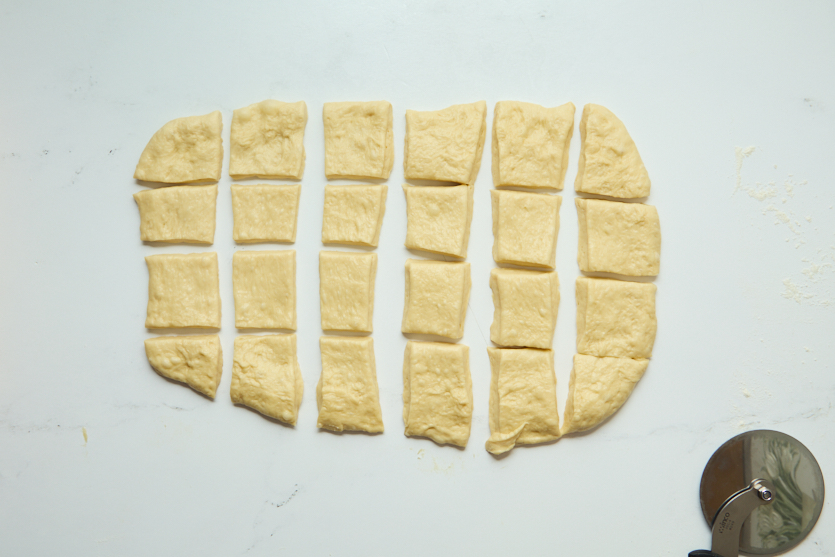
- Don't dock the dough. Don't press down the cut edges. And don't reroll scraps. You can fry those pieces separately as little chef treats.
Final proof
- Place parchment paper on a baking sheet. Lightly flour the parchment paper. This helps keep the dough from sticking to the parchment. Place the dough pieces about 2 inches apart.
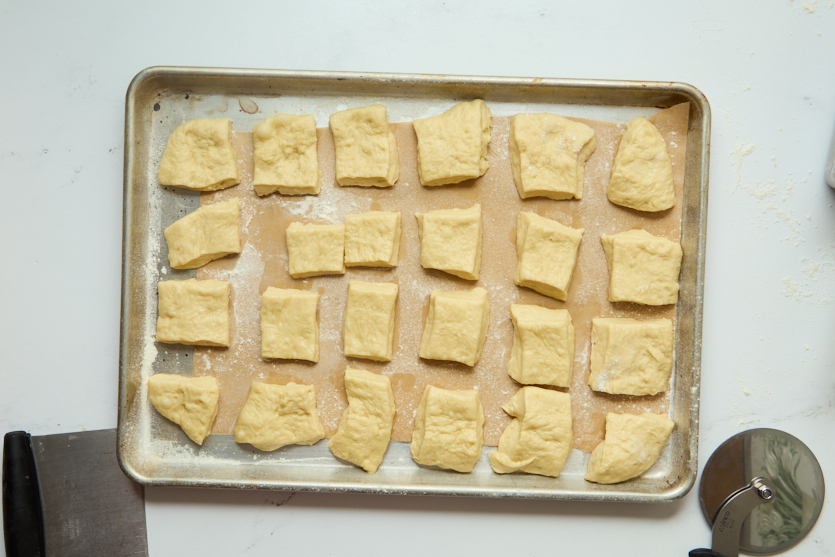
- Set the tray aside to proof again while you start heating the frying oil.
Fry
- In a deep pot, heat 3-4 inches of oil to 360℉. By the time the oil is up to temp, the dough should be done proofing.
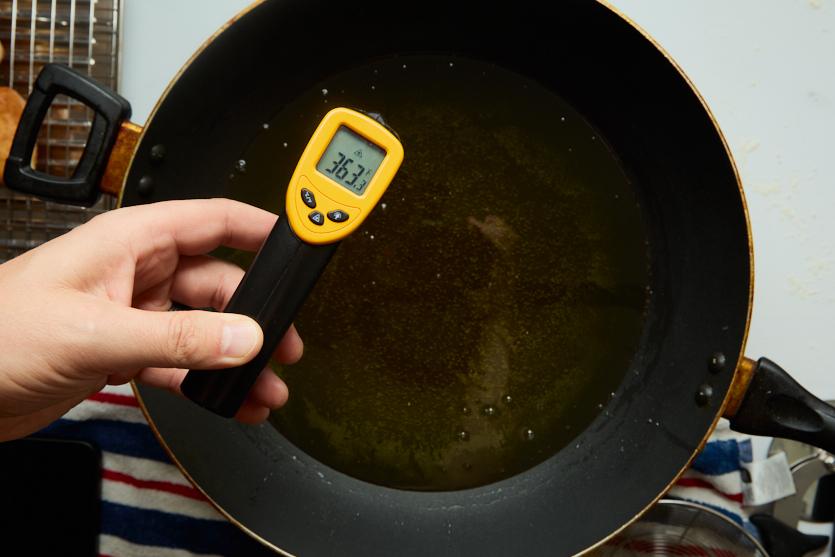
- Fry 4 beignets at a time. Once they hit the oil, they will start slightly below the surface and then balloon/puff very quickly.
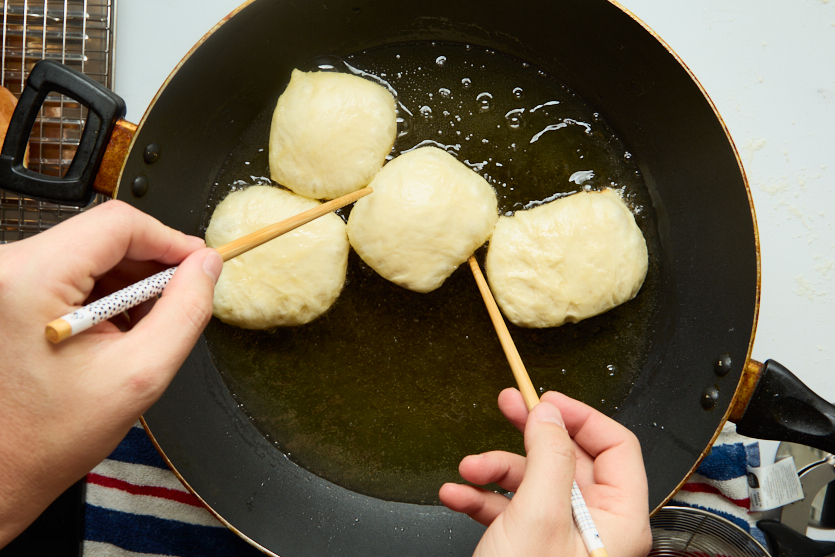
- Fry for approximately 45–60 seconds on the first side. Then flip.
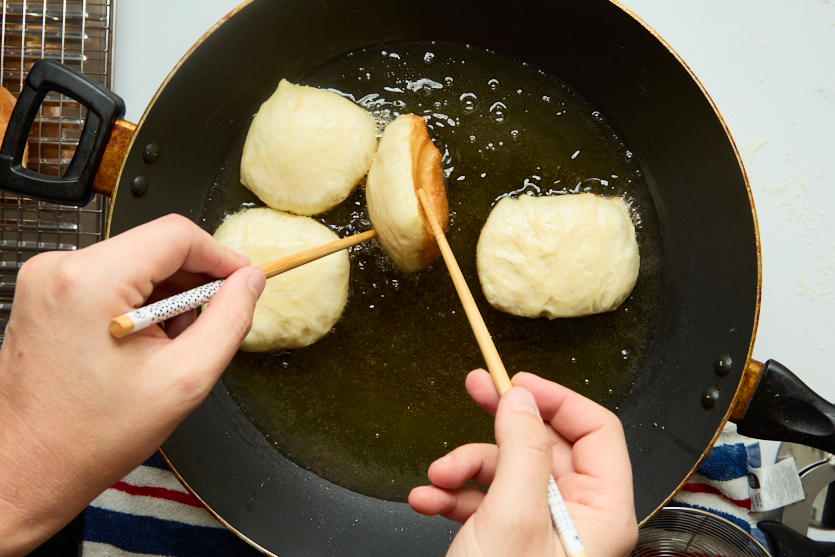
- Cook for an additional 90 seconds on the second side.
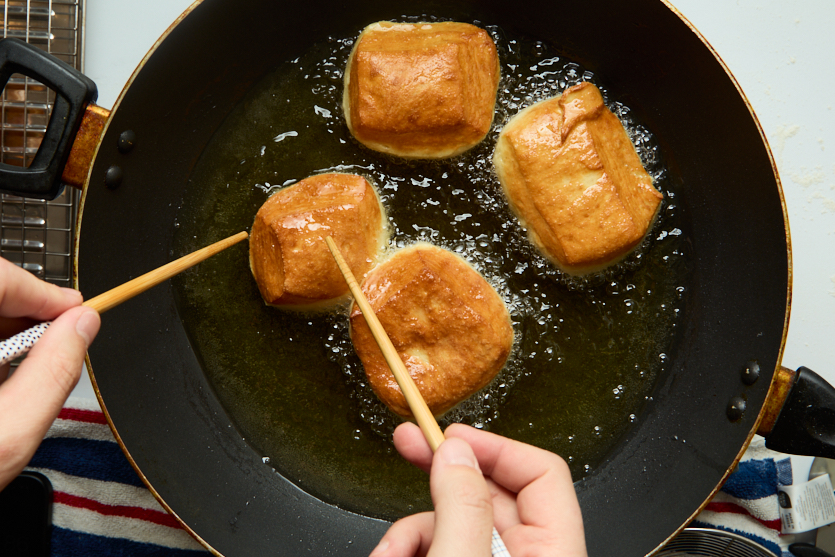
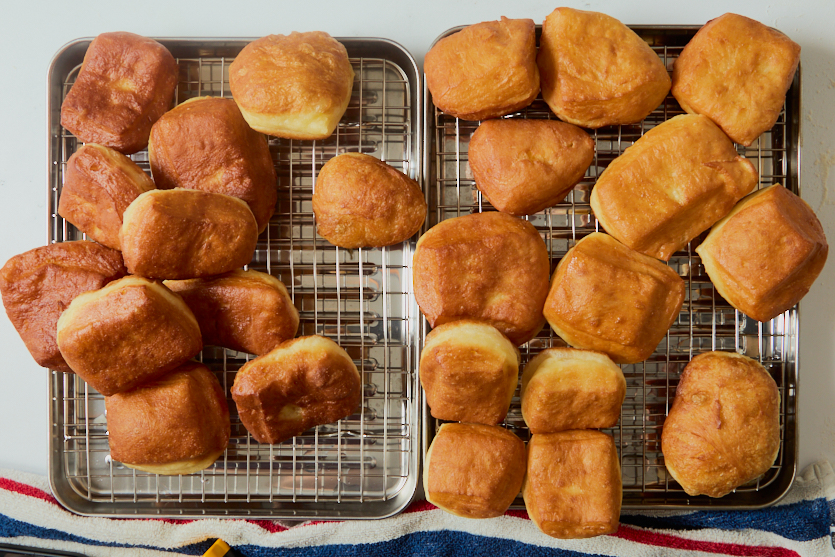
- Transfer to a wire rack for 30–60 seconds, then coat generously with powdered sugar while hot. Serve immediately
Notes
Nutrition
 What do you think of this recipe?Keep scrolling for the full recipe post. Please consider Leaving a Review!
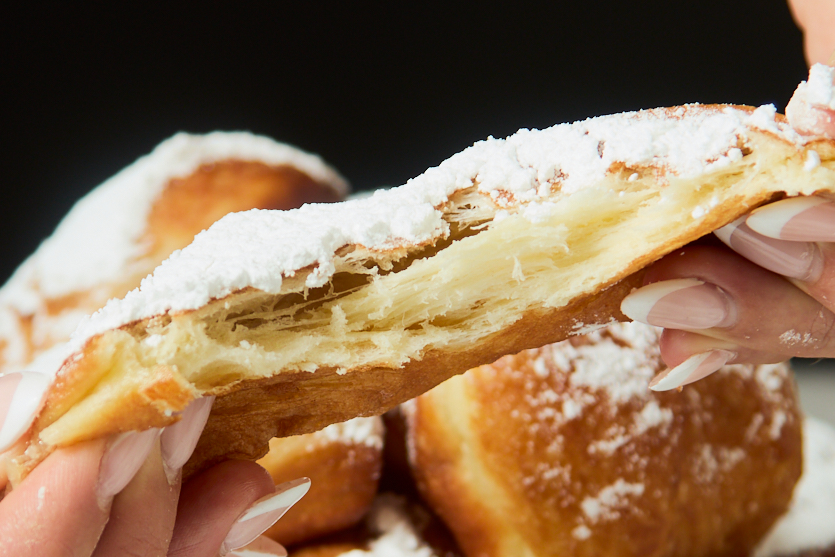
Most beignets are heavy. Bread-like through the middle, the kind you get at Cafe du Monde. Mine are not that.
The dough runs at a higher hydration than a standard beignet dough. That single change does most of the work. The interior comes out chewy and light instead of bready, and the outside fries up actually crisp. Crispy exterior + chewy interior, which is not how most people would describe a beignet.
This is the Michelin star version of a Cafe du Monde beignet.
80% hydration
Run the numbers on the milk and water alone and you get 76.25% against the flour weight. Account for the actual water in the milk and the egg and it lands closer to 80% effective hydration.
That is wet for a dough you have to cut and lift and drop into hot oil, and it is the whole reason the interior comes out light and chewy instead of bready.
Let it rest before you touch the mixer
I personally like using a dough whisk to bring the dough together. After the wet and dry come together into a shaggy dough, let it sit for 10 minutes.
This matters more here than it would at a normal hydration. The bread flour needs that time to actually absorb the liquid. Start kneading a dough this wet before the flour has caught up and you’re fighting it the whole way.
Gluten development is not optional
Hydration that high only works if the gluten is properly developed.
Dough hook, medium-high, setting 6. Five to six minutes to start, until it turns smooth and elastic. Then the butter goes in and you run it another five. Salt last, one more minute. The dough will be very soft and sticky at that point. Don’t add flour to fix it, because there’s nothing to fix.
Check for a windowpane before you stop. Pull off a small piece and stretch it. You want a thin translucent membrane that doesn’t tear right away. If it tears, keep going.
Bulk ferment
Grease a proofing container, transfer the dough, cover it. Into the oven with the light on, two hours.
Rolling and cutting
Lightly flour the work surface, then turn the dough out onto it. Lightly dust the top of the dough too. That’s your insurance on both sides.
Hands and a rolling pin, into a 6.5 by 15 inch rectangle, about half an inch thick. Cut it into a 6 by 4 grid with a sharp knife or a pizza wheel. That gives you 24 pieces.
Three things not to do here. Don’t dock the dough. Don’t press down the cut edges. Don’t reroll the scraps, just fry those separately as little chef treats.
If you’ve made my pizza dough with a poolish, the feel of a slack dough won’t be a total shock, though this one runs wetter.
The final proof runs on the oil
Parchment on a baking sheet, lightly floured so the dough doesn’t stick to it. Pieces two inches apart. Then set the tray aside and go start your oil.
That’s the whole timer. By the time the oil is up to temperature, the dough is done proofing.
Frying
Three to four inches of neutral oil at 360°F.
I use a wok. It’s deep, and the wide opening makes it much easier to scoop and flip what you’re frying. A deep pot works too.
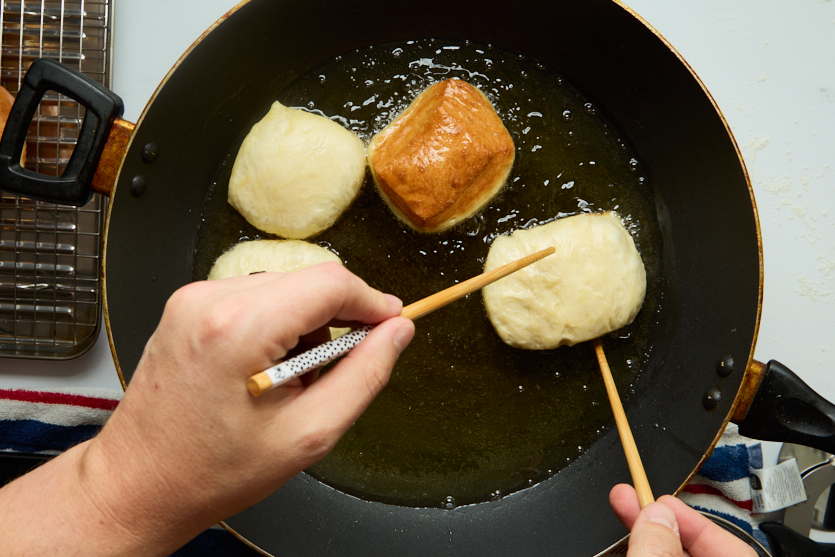
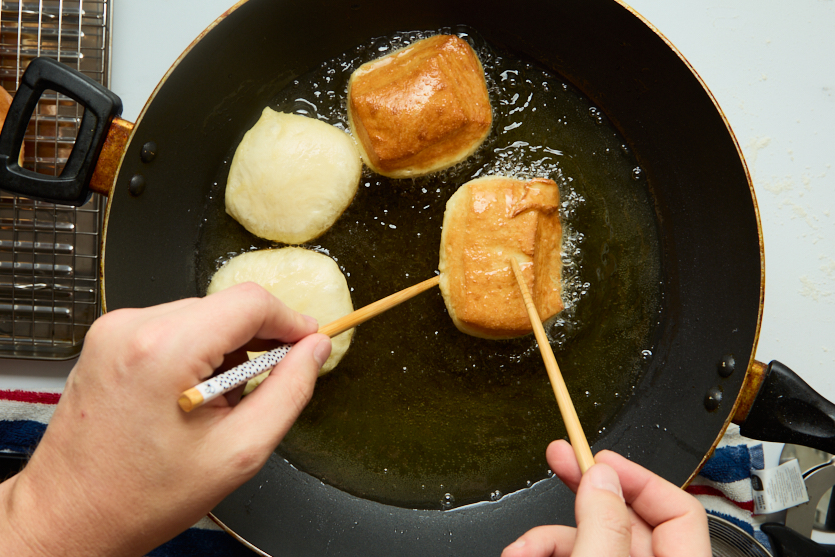
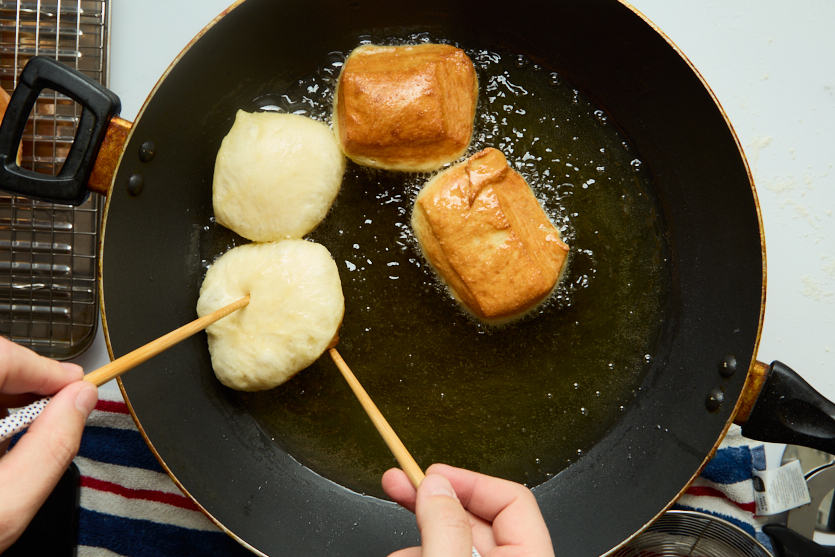
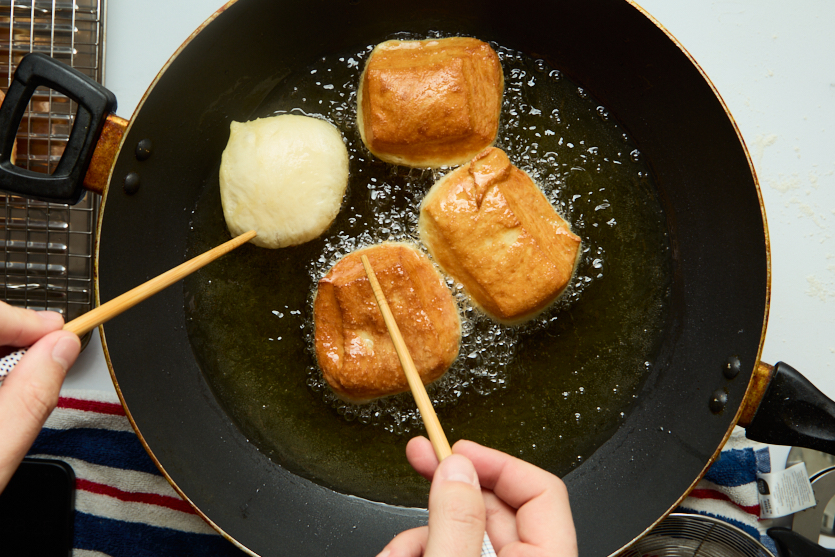
Four at a time. They’ll sit just under the surface for a second and then balloon up fast. Forty-five to sixty seconds on the first side, then flip. Keep the oil between 355 and 365°F and let it come back up between batches.
This isn’t the only fried dough on the site. There’s also a simpler fried bread if you want something with fewer moving parts.
Flip with chopsticks
Not a spider, not tongs. Chopsticks.
This is the method most donut shops use. Chopsticks are delicate and precise, and they let you tip the dough over onto its other side instead of picking it up and dropping it back down. No splashing.
This isn’t the only fried dough on the site. There’s also a simpler fried bread if you want something with fewer moving parts.
Finishing
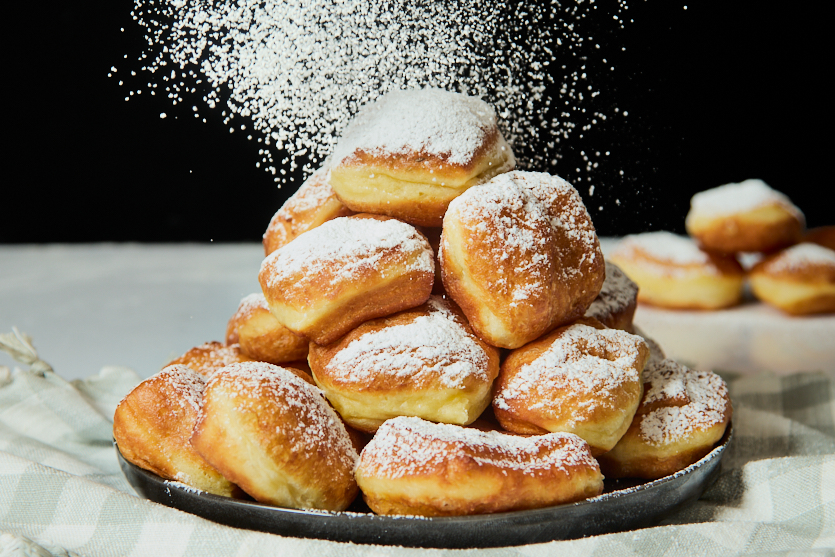
Wire rack, 30 to 60 seconds, then coat them generously with powdered sugar while they’re still hot. Serve immediately. That crisp shell is the entire point and it does not wait around for you.
A pot of hot chocolate with marshmallows is a good call alongside these if you’re not doing coffee.