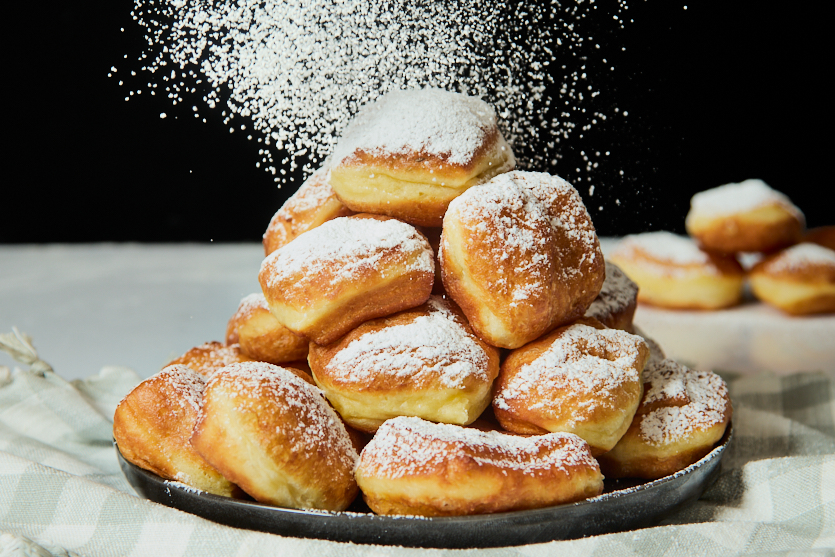
High hydration beignets with a crisp shell and a chewy, light interior. Nothing like the heavy, bread-like beignets you get at places like Cafe du Monde.
Equipment
- 1 stand mixer for mixing
- 1 deep pot or wok, for frying
Ingredients
- 400 g bread flour
- 160 g whole milk
- 145 g water
- 80 g white sugar
- 1 egg large (about 50g)
- 4 g instant yeast
- 7 g fine salt
- 35 g Kerrygold butter softened (about 3 tbsp)
- 5 g vanilla extract 1 tsp
- neutral oil for frying
- ½ cup powdered sugar for finishing
Instructions
Mix the dough
- Combine milk and water in a microwave-safe bowl. Warm to about 95–100°F.
- Add the egg and vanilla extract. Whisk until combined.
- In the bowl of the stand mixer, add flour, yeast, and sugar. Mix thoroughly.
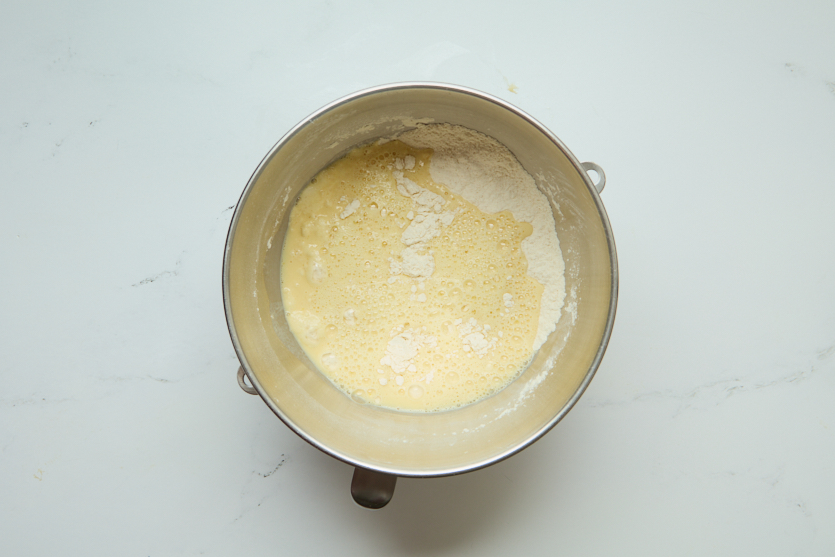
- Add the wet ingredients to the dry ingredients. Use a spatula to combine until a shaggy dough has formed.
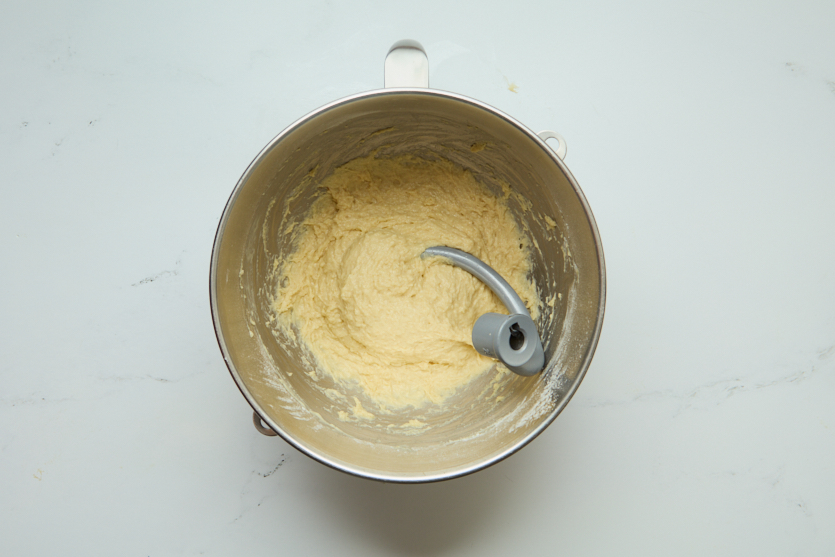
A good rule of thumb is that 95°F–100°F liquid feels exactly like your own body temperature. It is neither hot nor cold. If it feels noticeably hot, it is likely above 100°F. If it feels cool, it is below 95°F.
Rest 10 minutes
- Let the dough rest for 10 minutes.
This is particularly important with our higher hydration because it gives the bread flour time to absorb the liquid.
Develop the gluten
- Use a dough hook and knead the dough on medium-high speed (setting 6) for 5-6 minutes until the gluten begins to develop and a smooth, elastic dough begins to form.
Add the butter
- Add butter and knead on medium-high speed (setting 6) for another 5 minutes.
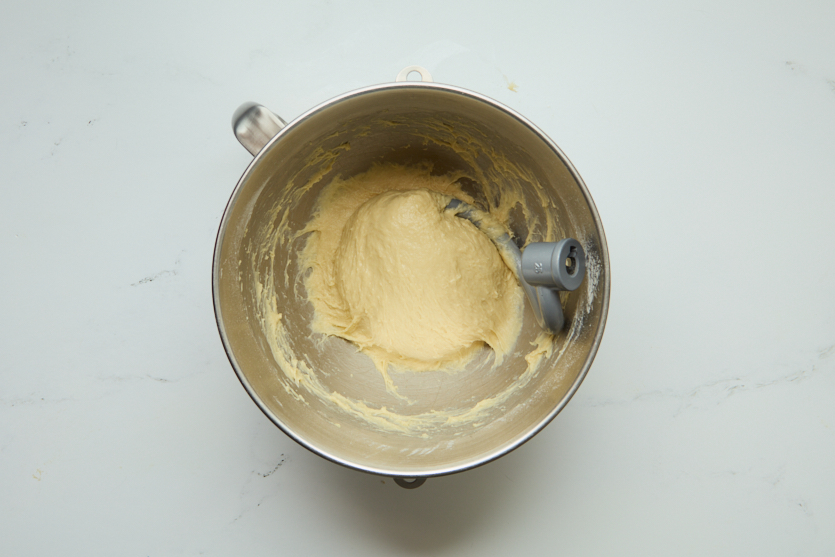
- Add salt and knead for another 1 minute. The dough will be very soft and sticky. Don't add flour.
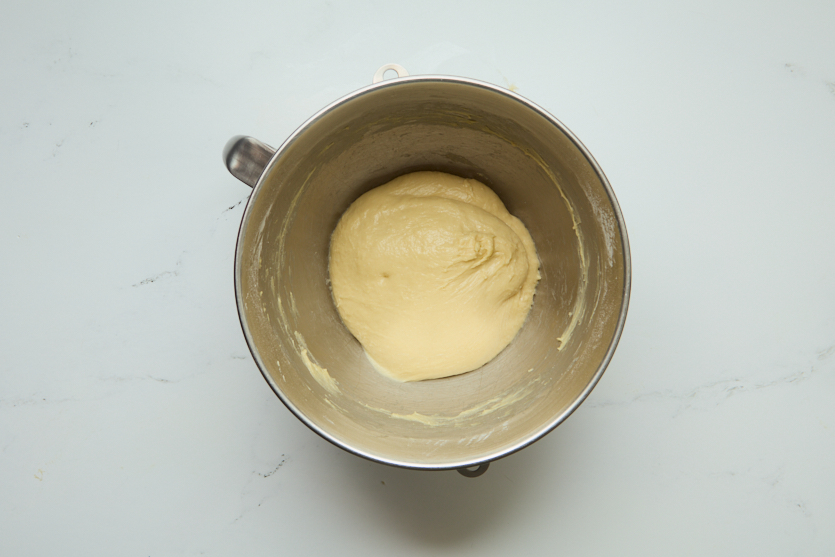
Check for a windowpane. A small piece should stretch into a thin translucent membrane without immediately tearing.
Bulk ferment
- Transfer to a lightly greased proofing container and cover.
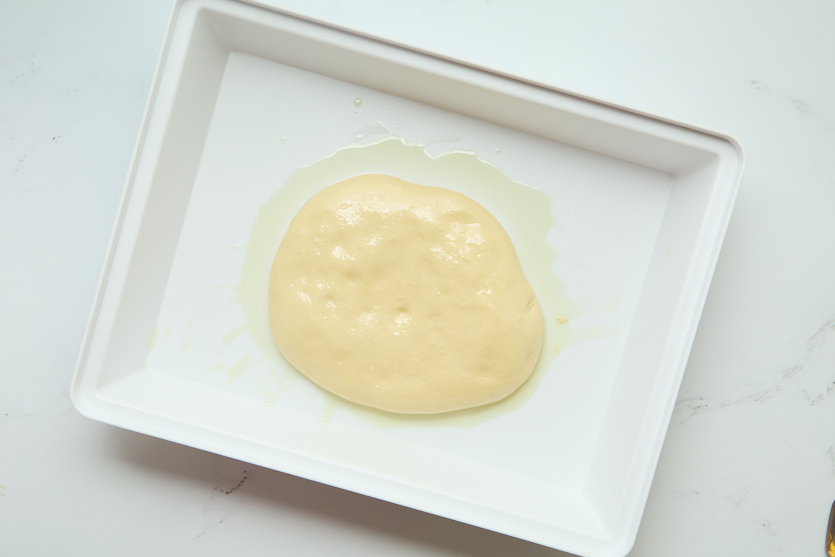
- Place the container in the oven and turn on the oven light. Let the dough rise for 2 hours.
Roll and cut
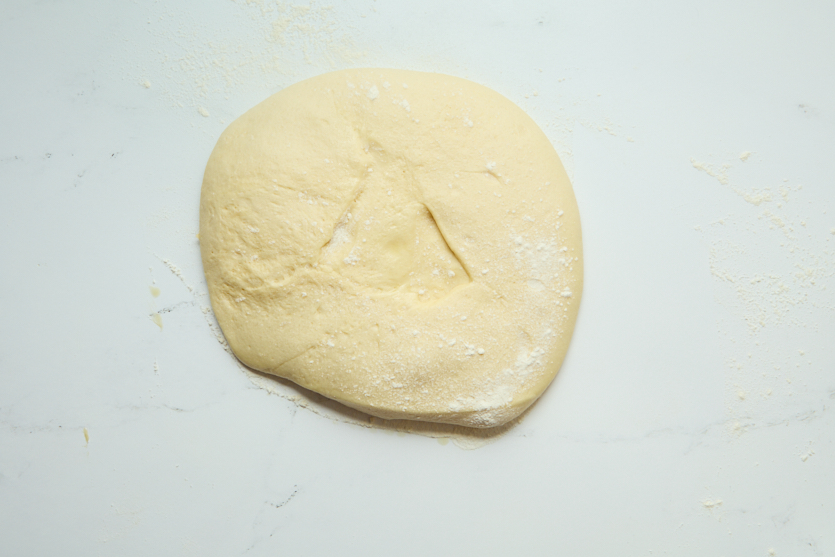
- Turn out onto a lightly floured surface. Lightly dust the dough with flour.
- Using your hands and a rolling pin, shape it into a 6.5"x15" rectangle. Dough should be about 1/2" thick.
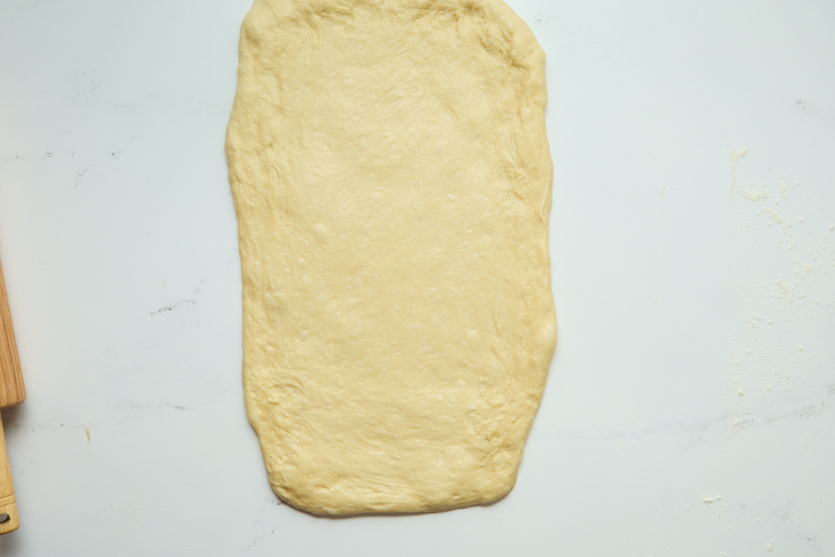
- Using a sharp knife or pizza wheel, cut 6 vertical strips that are 2½-inch wide. The cut 4 horizontal cross sections that are 2½-inch wide. This will result in 24 2½-inch pieces.
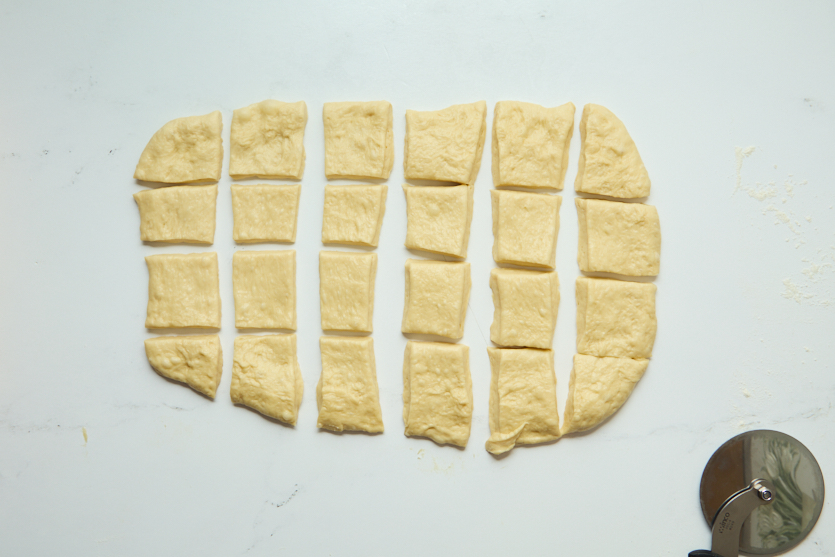
- Don't dock the dough. Don't press down the cut edges. And don't reroll scraps. You can fry those pieces separately as little chef treats.
Final proof
- Place parchment paper on a baking sheet. Lightly flour the parchment paper. This helps keep the dough from sticking to the parchment. Place the dough pieces about 2 inches apart.
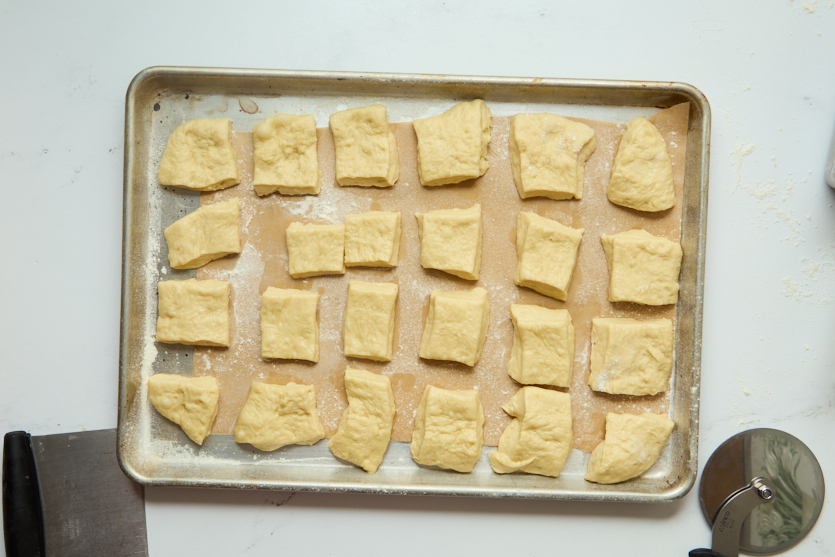
- Set the tray aside to proof again while you start heating the frying oil.
Fry
- In a deep pot, heat 3-4 inches of oil to 360℉. By the time the oil is up to temp, the dough should be done proofing.
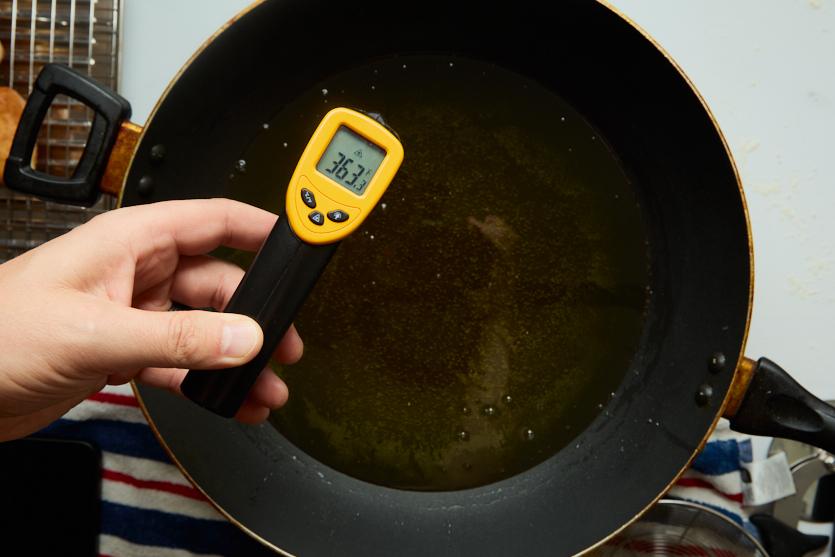
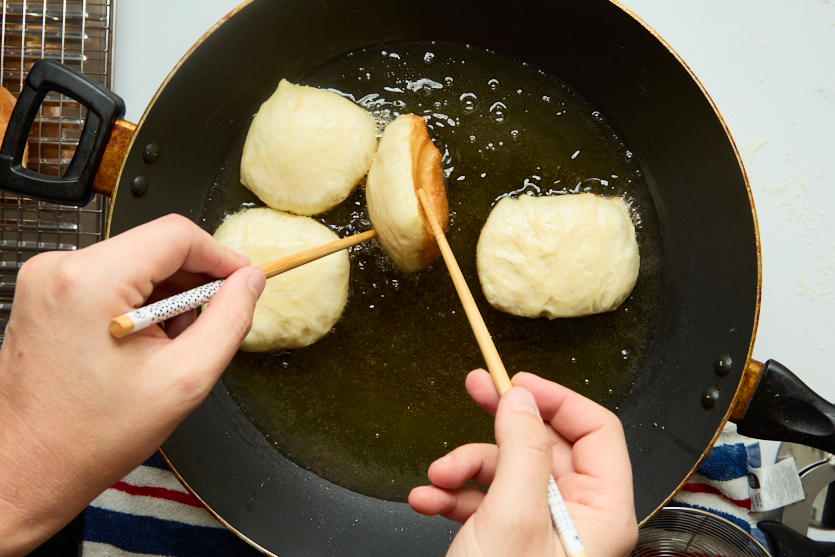
- Fry 4 beignets at a time. Once they hit the oil, they will start slightly below the surface and then balloon/puff very quickly.
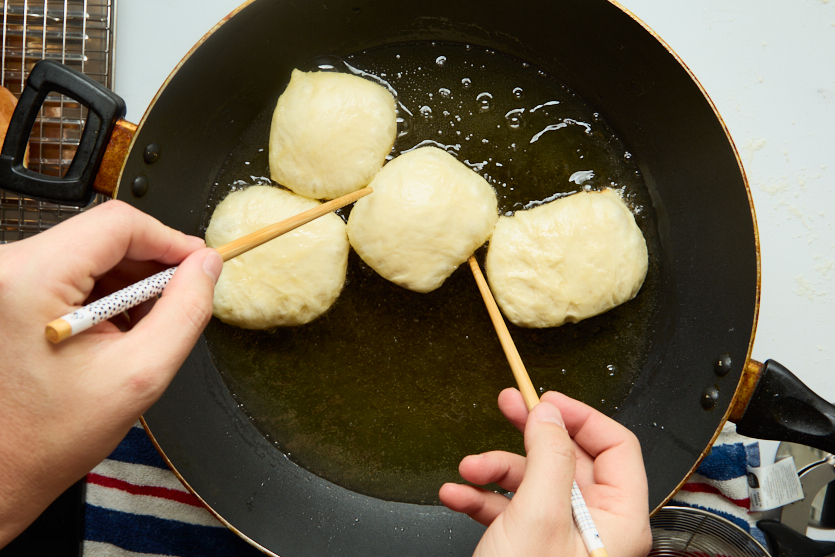
- Fry for approximately 45–60 seconds on the first side. Then flip.
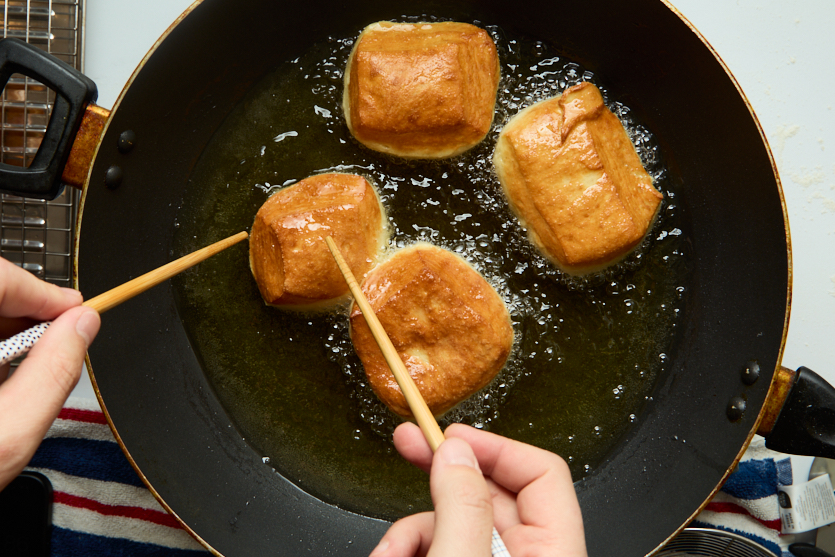
- Cook for an additional 90 seconds on the second side.
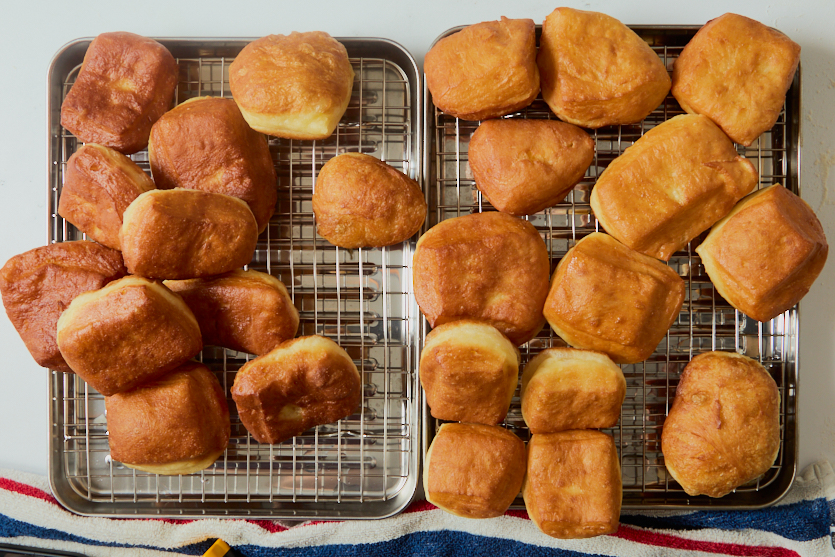
- Transfer to a wire rack for 30–60 seconds, then coat generously with powdered sugar while hot. Serve immediately
I like to use a wok for deep frying because it's deep and has a wide opening that makes it easy to scoop and flip the food you're frying.
Keep the oil around 355–365°F, allowing it to recover between batches.
Notes
Body temperature is your thermometer. Liquid at 95 to 100°F feels exactly like your own body temperature. Neither hot nor cold. If it feels noticeably warm, you're above 100. If it feels cool, you're below 95.
The dough is supposed to be sticky. Very soft, very sticky, and you leave it that way. The only flour that touches it is the light dusting on the work surface and the top of the dough before you roll.
Chopsticks over anything else in the oil. Tipping beats lifting. You get precision without splashing 360°F oil at yourself.
Don't rescue the scraps. No rerolling. Fry them as is and eat them standing over the stove.
Watch the oil, not the clock, between batches. Four pieces at 360°F will pull the temperature down. Let it come back into the 355 to 365 range before the next round goes in.
Nutrition
Calories: 101kcal | Carbohydrates: 18g | Protein: 3g | Fat: 2g | Saturated Fat: 1g | Polyunsaturated Fat: 0.2g | Monounsaturated Fat: 0.4g | Trans Fat: 0.05g | Cholesterol: 11mg | Sodium: 128mg | Potassium: 32mg | Fiber: 0.4g | Sugar: 6g | Vitamin A: 57IU | Calcium: 12mg | Iron: 0.2mg
 What do you think of this recipe?Keep scrolling for the full recipe post. Please consider Leaving a Review!