

Ingredients
- 1 lb spaghetti
- 6 tbsp unsalted butter
- 6 garlic cloves finely minced
- ¼ cup gochujang paste the thick, deep red kind—not the squeezable sauce
- ¼ cup honey
- ¼ cup rice vinegar
- Kosher salt and freshly ground black pepper
- Thinly sliced scallions for garnish
Instructions
Boil and prep
- Bring a large pot of salted water to a rolling boil and drop in the pasta. Cook until al dente—just shy of tender, with a tiny bit of bite left in the center. Scoop out about a cup of that starchy pasta water, then drain the noodles and set them aside.
Butter and bloom
- In a large skillet or wide saucepan, melt the butter over medium heat. Once it starts to foam and smell nutty—like the first few seconds of browned butter—toss in the minced garlic. Stir it around until fragrant, about 1 minute. Keep an eye on it; you want gentle sizzle, not burnt bitterness.
Build the sauce
- Stir in the gochujang paste and let it melt into the butter. It’ll darken slightly and become glossy. Add the honey and rice vinegar, stirring until everything becomes a smooth, red-lacquered sauce that smells both sweet and spicy, with a tangy tickle at the back of your nose.
Bring it together
- Add the drained pasta straight into the skillet. Toss vigorously—tongs help here—until every strand is slicked and glowing. If the sauce feels too thick or sticky, splash in a bit of that reserved pasta water. You're looking for a silky consistency that clings to the noodles without pooling at the bottom.
Season and serve
- Taste and season with salt and pepper. Keep in mind that gochujang brings some salt on its own, so go slow. Pile into bowls, top generously with scallions, and serve hot—chopsticks or forks, no judgment here.
 What do you think of this recipe?Keep scrolling for the full recipe post. Please consider Leaving a Review!
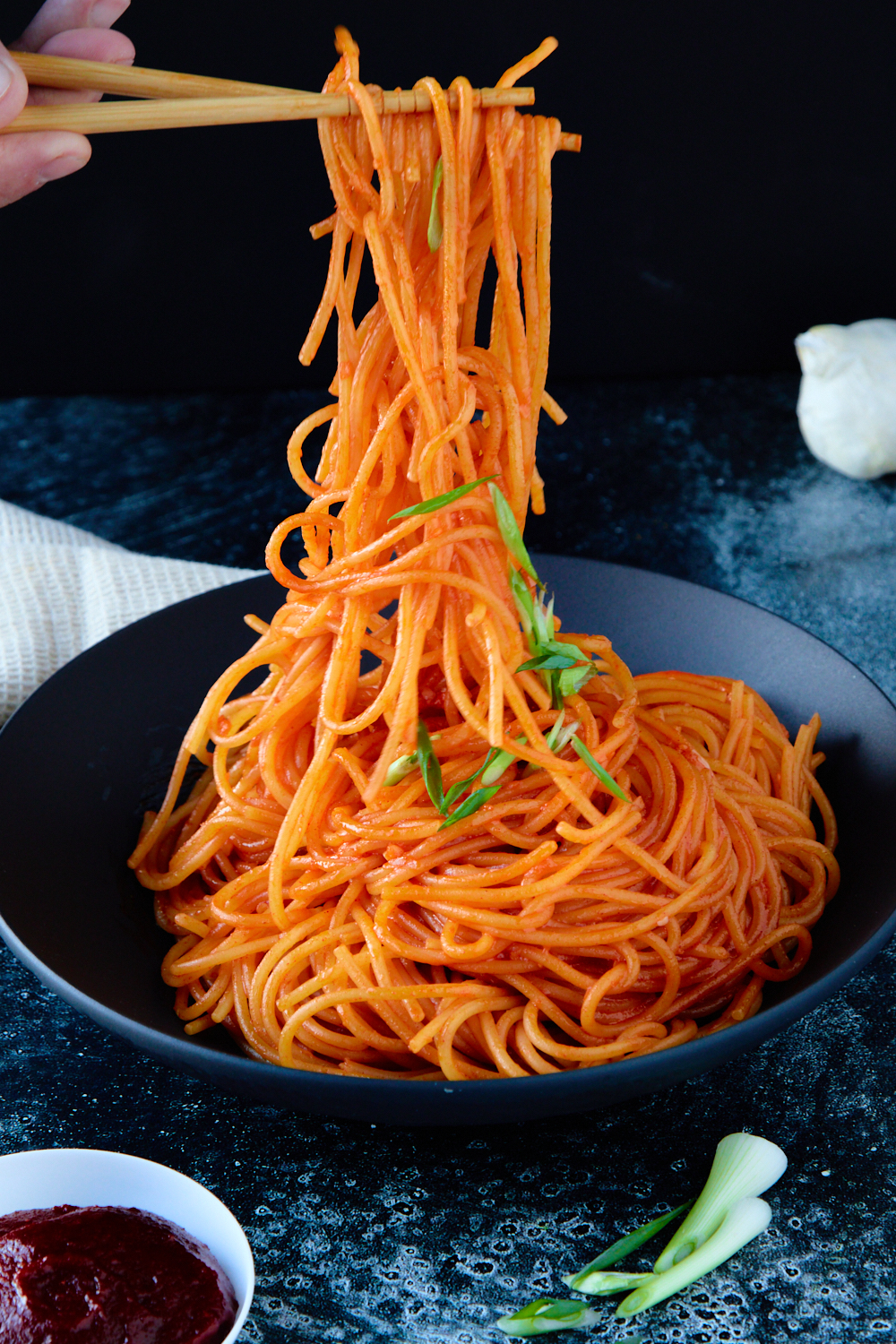
You know those nights when you want something comforting, a little spicy, a little sweet, and very, very low effort? These gochujang buttered noodles are your new go-to. They’re like the cool older cousin of spicy ramen and garlic noodles—bold, buttery, and ready in under 30 minutes.
What makes this recipe a keeper (besides the fact that it only dirties one skillet and one pot)? It leans hard on pantry staples—spaghetti, garlic, butter—and turns them into something way more exciting with the help of gochujang, honey, and rice vinegar. The result: glossy, umami-packed noodles that hit every flavor zone in your mouth.
If you’ve never cooked with gochujang before, this is a great entry point. You’re not eating it straight from the tub—it’s mellowed out by the butter and sweetened just enough by the honey. Plus, I’ll walk you through a few tricks to get the sauce just right (and avoid the dreaded too-thick noodle clump).
Can I use a different pasta shape?
Yes, 100%—this is a judgment-free noodle zone. While spaghetti gives you nice slurpable strands, feel free to swap in:
- Ramen or instant noodles (ditch the seasoning packet)
- Udon for a chewier, heartier bite
- Linguine or bucatini if that’s what you’ve got
The key is saving some pasta water to loosen the sauce if needed. Don’t skip it!
Gochujang paste vs. sauce: What’s the difference?
You want the thick, fermented chili paste that comes in a tub (usually red, sometimes plastic, often Korean-language labeled). Not the squeeze bottle kind that’s blended with mayo or soy sauce.
Using the paste gives you that deep, rich, slightly funky flavor that holds up against butter. It’s the same stuff I use in gochujang glazed salmon and spicy Korean chicken wings.
How spicy is this?
I’d call it a medium heat—enough to make your lips tingle but not so much that you’ll break a sweat. If you want to dial it down for kids (or spice-shy friends), you can:
- Use 2 tablespoons gochujang instead of 1/4 cup
- Add a splash more honey to balance the heat
Or if you’re feeling bold, top with chili crisp or a few drops of toasted sesame oil for an extra punch.
Leftovers + reheating tips
This reheats surprisingly well—a quick spin in the microwave with a splash of water brings the sauce back to life.
- Store in an airtight container in the fridge for up to 3 days
- Reheat with 1–2 tablespoons water per serving, covered, in the microwave or in a pan over low heat
I’ve also repurposed leftovers as a base for stir-fried veggies or topped them with a fried egg and called it lunch. No regrets.
Want to round it out?
You can absolutely bulk this out with add-ins:
- Stir-fried shrimp or chicken
- Quick sautéed bok choy or spinach
- A jammy egg, ramen-style
Or keep it simple and serve it alongside crispy tofu with sesame glaze or roasted broccoli with garlic soy drizzle.
Final tip: Trust the butter
Don’t skimp on the butter here. It’s what brings everything together and gives you that glossy, restaurant-style finish. Browning it just a little adds depth you didn’t know you needed.
And if you’re loving this sweet-spicy combo, next up you should definitely try honey sriracha glazed meatballs or chili garlic noodles—both are in the same flavor family and just as weeknight-friendly.
Happy noodling!